Keith's Messed Up Kung Pao Chicken
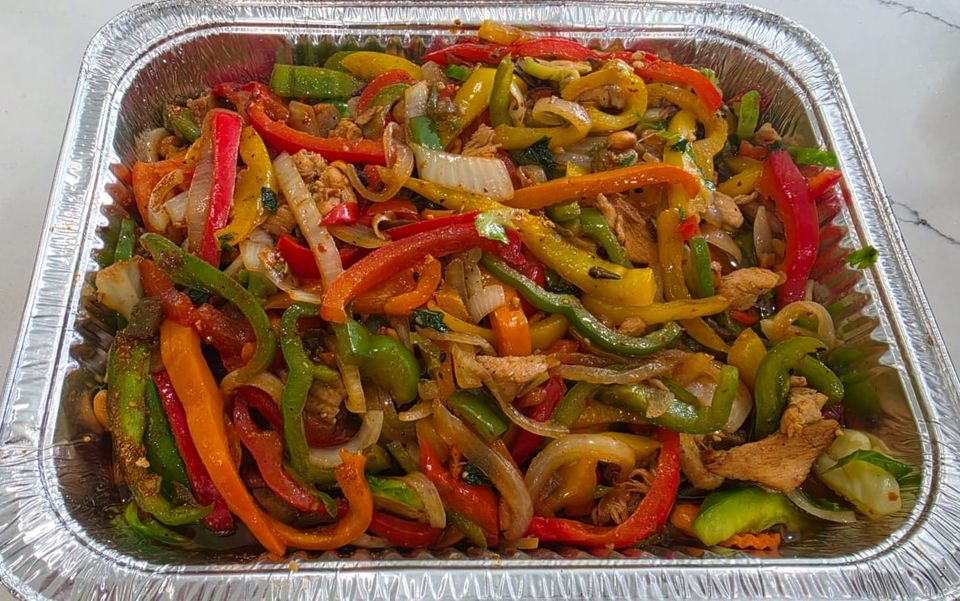
Serves 10–12 generously
This is a big-batch recipe. Serve it over rice and it'll stretch even farther.
The Story
I call this Keith’s Messed Up Kung Pao Chicken because somewhere along the way I stopped worrying about whether I was actually making Kung Pao chicken.
That was intentional.
I like borrowing professional cooking techniques when they’re useful, but I don't necessarily want to know every rule before I start. Sometimes knowing exactly how something is supposed to taste makes it harder to discover how I want it to taste.
There was another challenge here. Some members of my family don't like eating peppers, particularly when they associate peppers with heat. I wanted pepper to be the star without making the dish overwhelmingly hot.
Normally I use a traditional mirepoix of carrots, onions and celery as a starting point. This time I essentially made a mirepoix of peppers. Diced green peppers and jalapeño became the foundation of the sauce, with black pepper and chili powder adding different layers of pepper flavor.
Then came peanut butter, Korean BBQ seasoning, oyster sauce, Japanese BBQ sauce, garlic, hot sauce and a little liquid smoke.
And then I nearly burned the peanuts.
That turned out to be one of my favorite parts.
I toasted them aggressively in peanut oil until they were dark and slightly charred. When those peanuts went into the pepper base, something happened: the mixture darkened, became sticky and started to caramelize around them. The flavor changed with it.
Magic.
I also bought two convenient stir-fry vegetable kits—and deliberately threw their sauce packets aside. If I'm going to mess up Kung Pao chicken, I'm at least going to mess it up with my own sauce.
This isn't meant to be an authentic Kung Pao chicken recipe.
It's what happened when I borrowed some techniques, ignored some conventions and followed the flavor where it went.
Borrow professional technique.
Question the rules sometimes.
Cook a little blind.
Own the flavor.
Ingredients
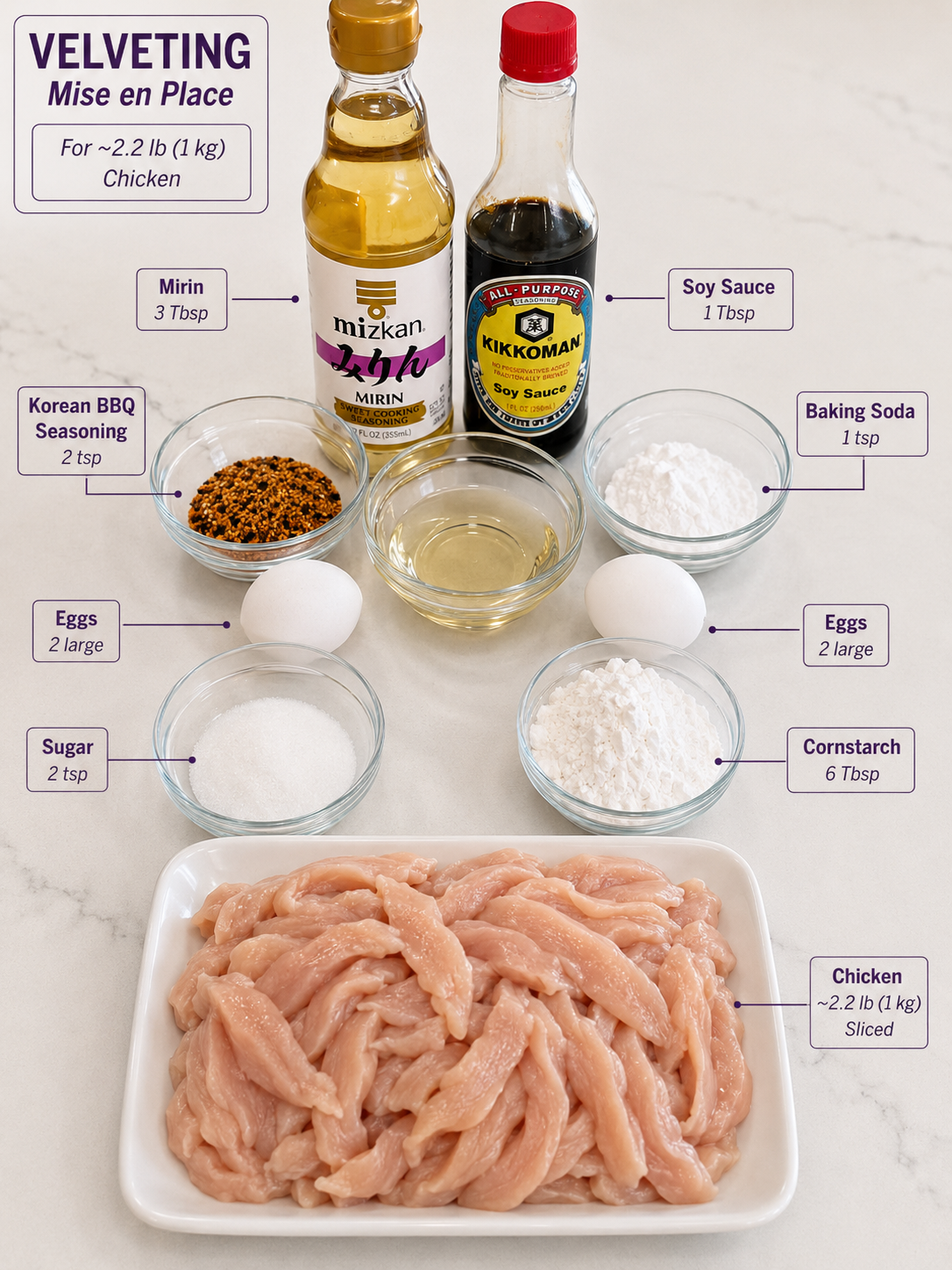
For the Chicken & Velvet
- 2 lb boneless, skinless chicken breasts
- 2 large eggs
- 6 Tbsp cornstarch
- 1 tsp baking soda
- 2 tsp white sugar
- 2 Tbsp Korean BBQ seasoning
- About 2 Tbsp soy sauce
- About 2 Tbsp mirin
- About 2 Tbsp peanut oil
- Water, as needed to thin the mixture slightly
Keith's Note: The soy sauce, mirin and peanut oil were splashes rather than carefully measured quantities. About 2 tablespoons each is a repeatable starting point. Use the consistency of the coating as your guide.
For the Pepper-Peanut Base
- 16 oz diced green peppers (two 8-oz containers)
- 1 large jalapeño, finely diced
- 3 Tbsp jarred minced garlic
- 2 Tbsp dark chili powder
- 2 Tbsp freshly ground black pepper
- 2 Tbsp Korean BBQ seasoning
- 1 Tbsp hot sauce
- 1 Tbsp liquid smoke
- ¼ cup Japanese BBQ sauce
- ¼ cup oyster sauce
- ¼ cup peanut butter
- ½ cup shelled peanuts
- Peanut oil, as needed
For the Peppers & Onions
- 2 green bell peppers
- 2 red bell peppers
- 2 yellow bell peppers
- 2 orange bell peppers
- 2 onions
- Peanut oil, for a thin coating
- Soy sauce, for a thin coating
- Liquid smoke, for a thin coating
- Korean BBQ seasoning, for a thin coating
For the Asian Vegetables
- About 1½–1¾ lb prepared mixed stir-fry vegetables (2 bags)
- Peanut oil, for a thin coating
- Soy sauce, for a thin coating
- Liquid smoke, for a thin coating
- Korean BBQ seasoning, for a thin coating
I used one Ginger Garlic and one Teriyaki Taste of Inspirations stir-fry kit.
Don't use the included sauce packets. Save them for something else.
For Final Cooking
- Peanut oil, as needed for each batch
Instructions
1. Cut the Chicken
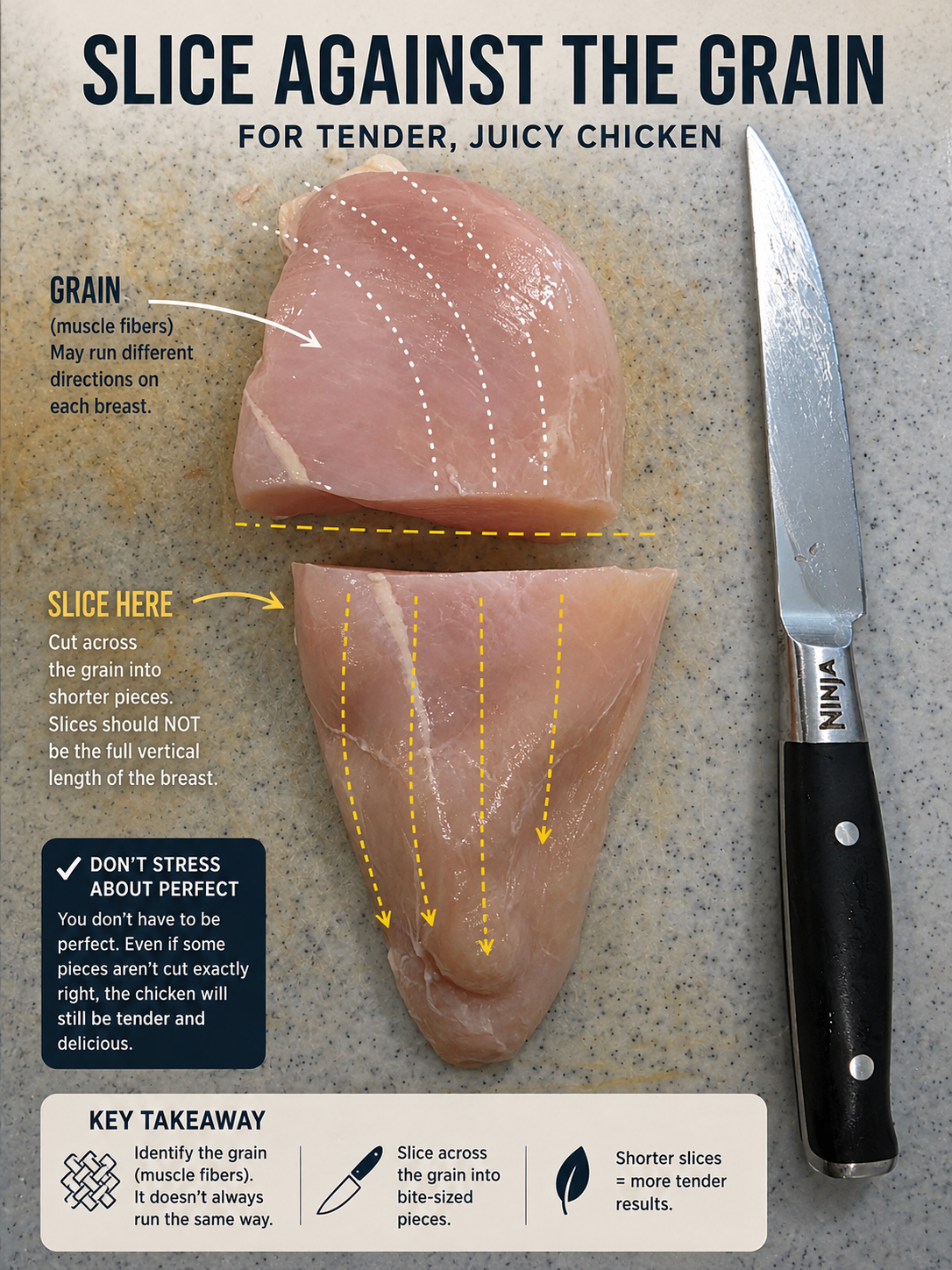
Look at the direction of the grain before slicing the chicken.
Slice against the grain whenever practical. If the breasts are especially thick, slice horizontally through them first to create thinner pieces, or gently pound them to a more even thickness.
Cut into manageable strips or bite-size pieces.
Don't worry about making every piece geometrically identical. Tender chicken matters more than perfect chicken.
2. Make the Velveting Mixture
In a large bowl combine the:
- eggs
- cornstarch
- baking soda
- sugar
- soy sauce
- mirin
- peanut oil
Whisk until combined.
Add a little water as needed to thin the mixture. It should be loose enough to coat the chicken rather than forming a thick paste.
Add the chicken.
Sprinkle the 2 tablespoons Korean BBQ seasoning directly over the chicken, massage it in, and then thoroughly mix the chicken with the velveting mixture.
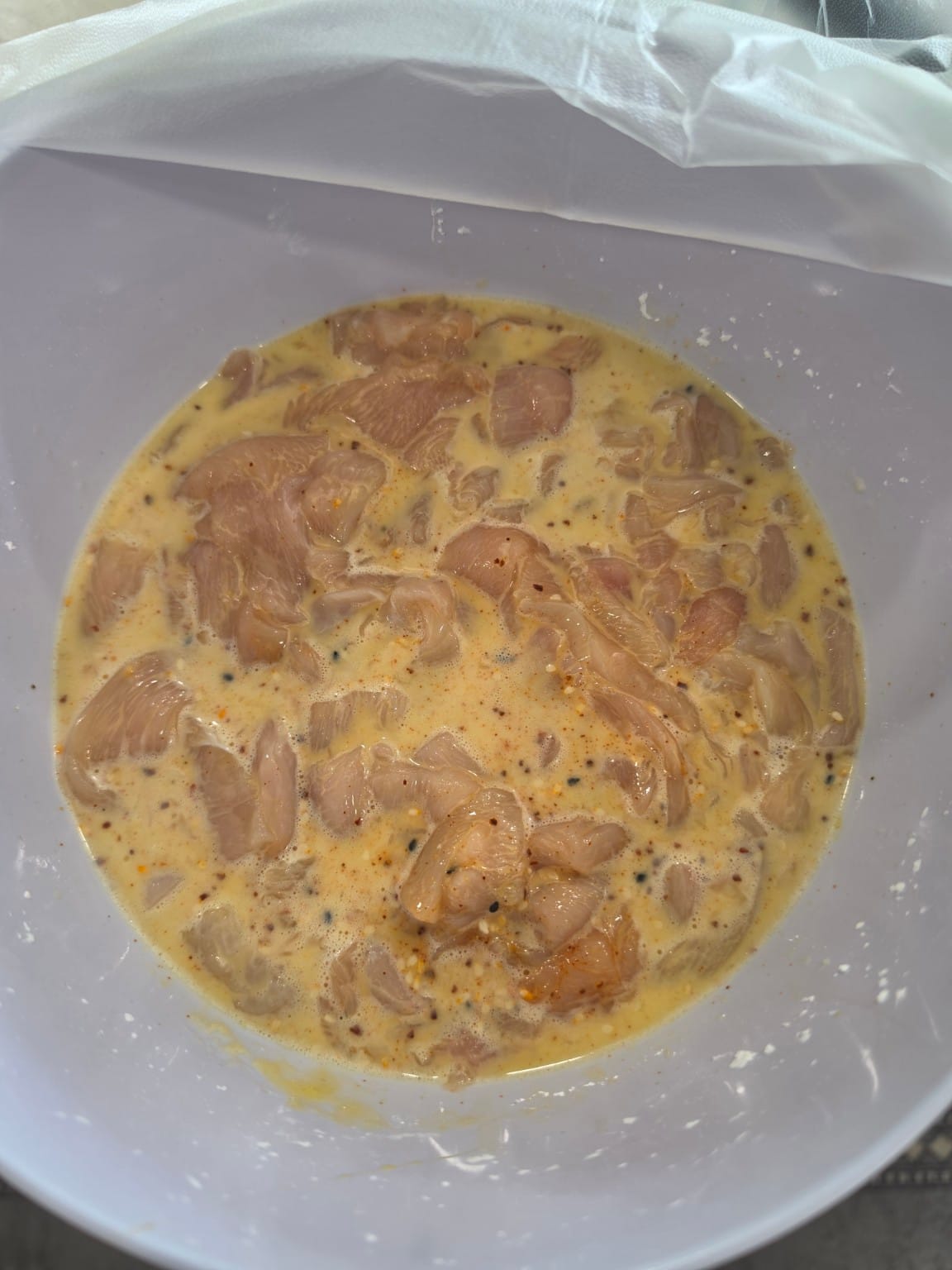
Cover and refrigerate for 1 hour.
3. Water-Velvet the Chicken
Fill a large pan approximately halfway with water and bring it to a boil.
Working in batches, lower the chicken into the boiling water.
Gently separate the pieces and cook for approximately 3 minutes.
Remove with a slotted spoon and allow the excess water to drain.
Set the chicken aside.
You're not looking for browning here. The chicken gets its final high-heat cooking later.
4. Prepare the Peppers & Onions
Stem and seed all eight bell peppers.
Slice the peppers and onions. I used a combination of longer strips and shorter slices rather than making everything exactly the same.
Place everything in a large bowl or pan.
Give the vegetables a thin coating of peanut oil, soy sauce and liquid smoke, followed by a thin, even coating of Korean BBQ seasoning.
Toss thoroughly.
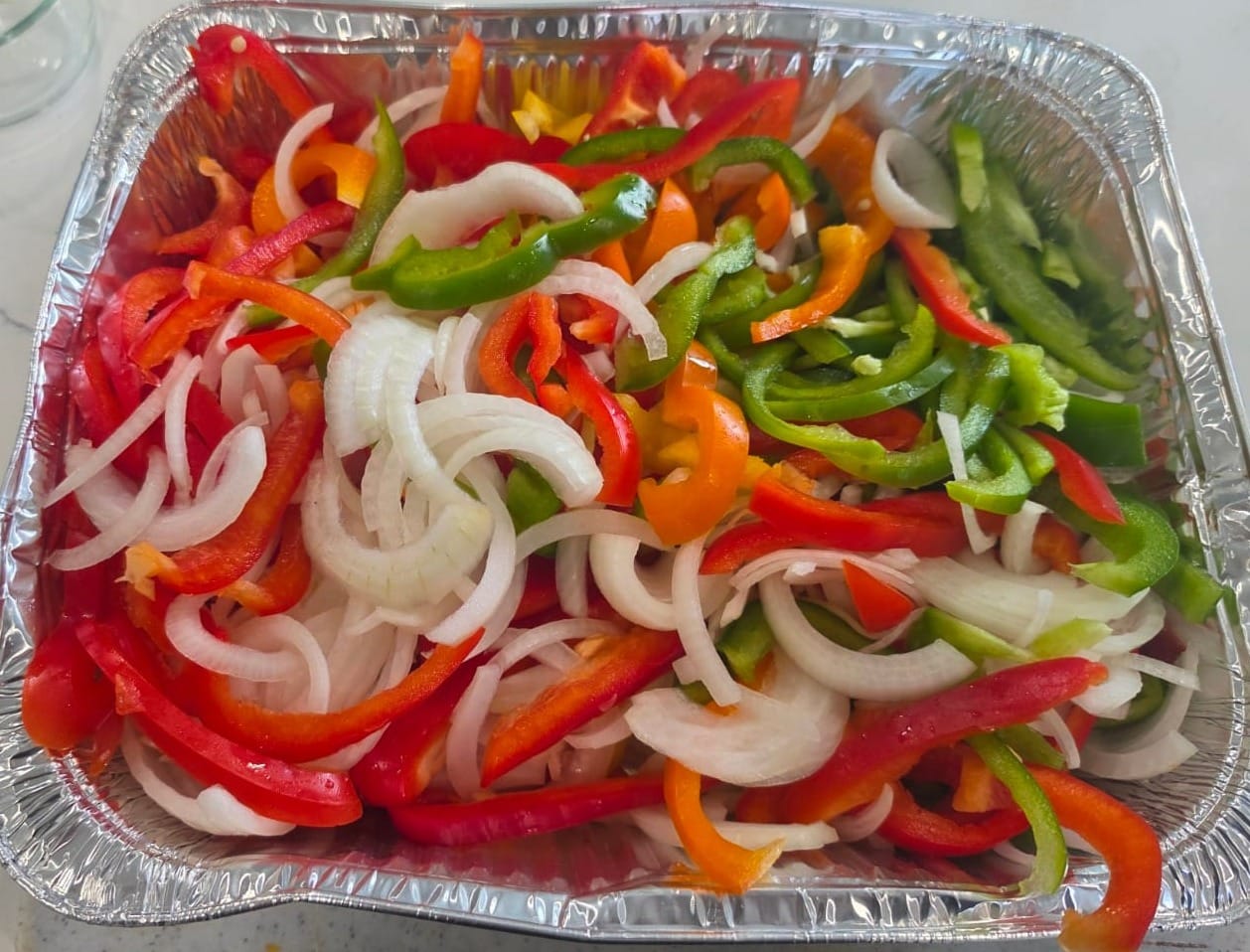
Do not cook them yet.
5. Prepare the Asian Vegetables
Remove the vegetables from both stir-fry kits and discard or save the packaged sauces.
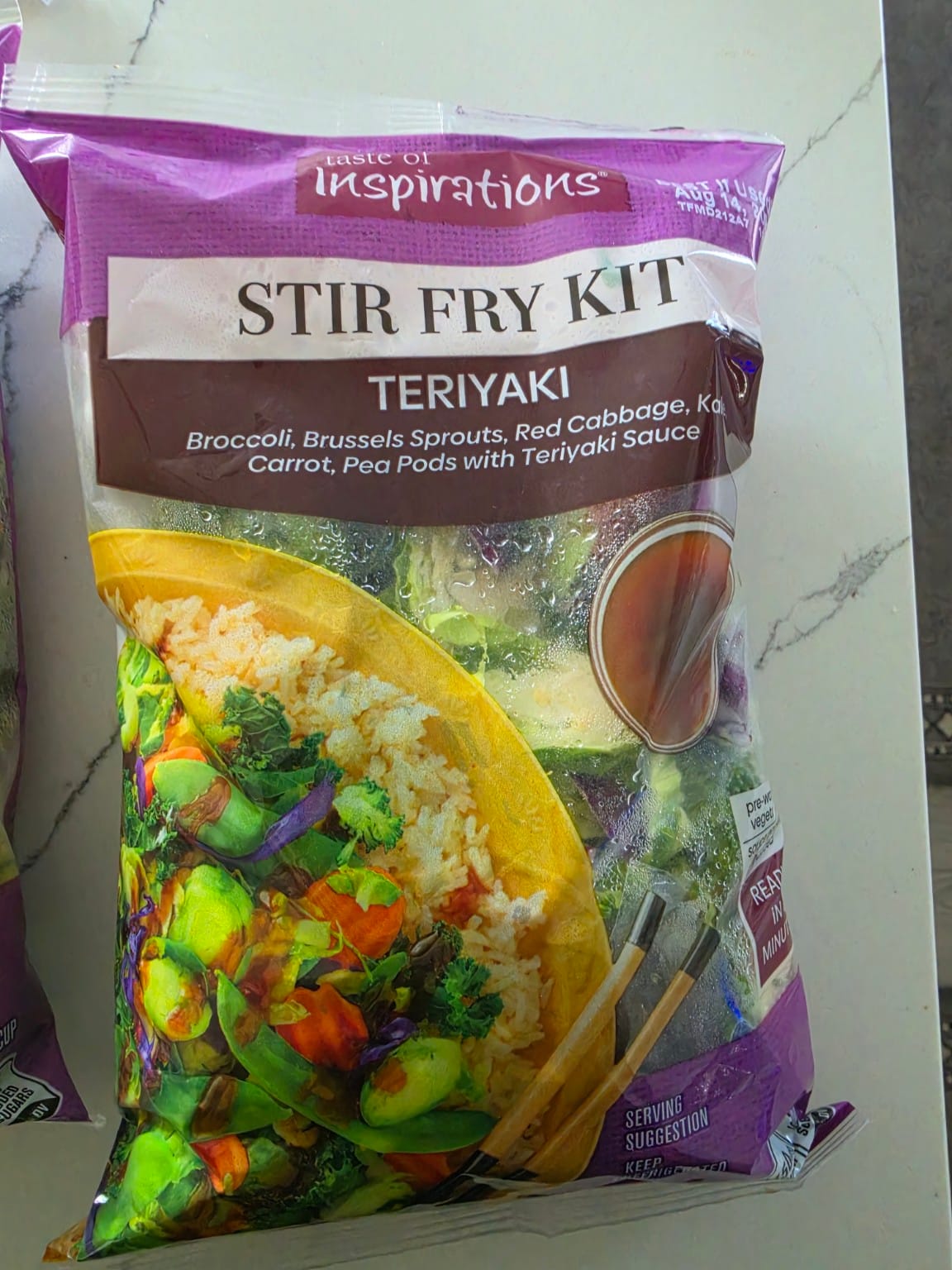
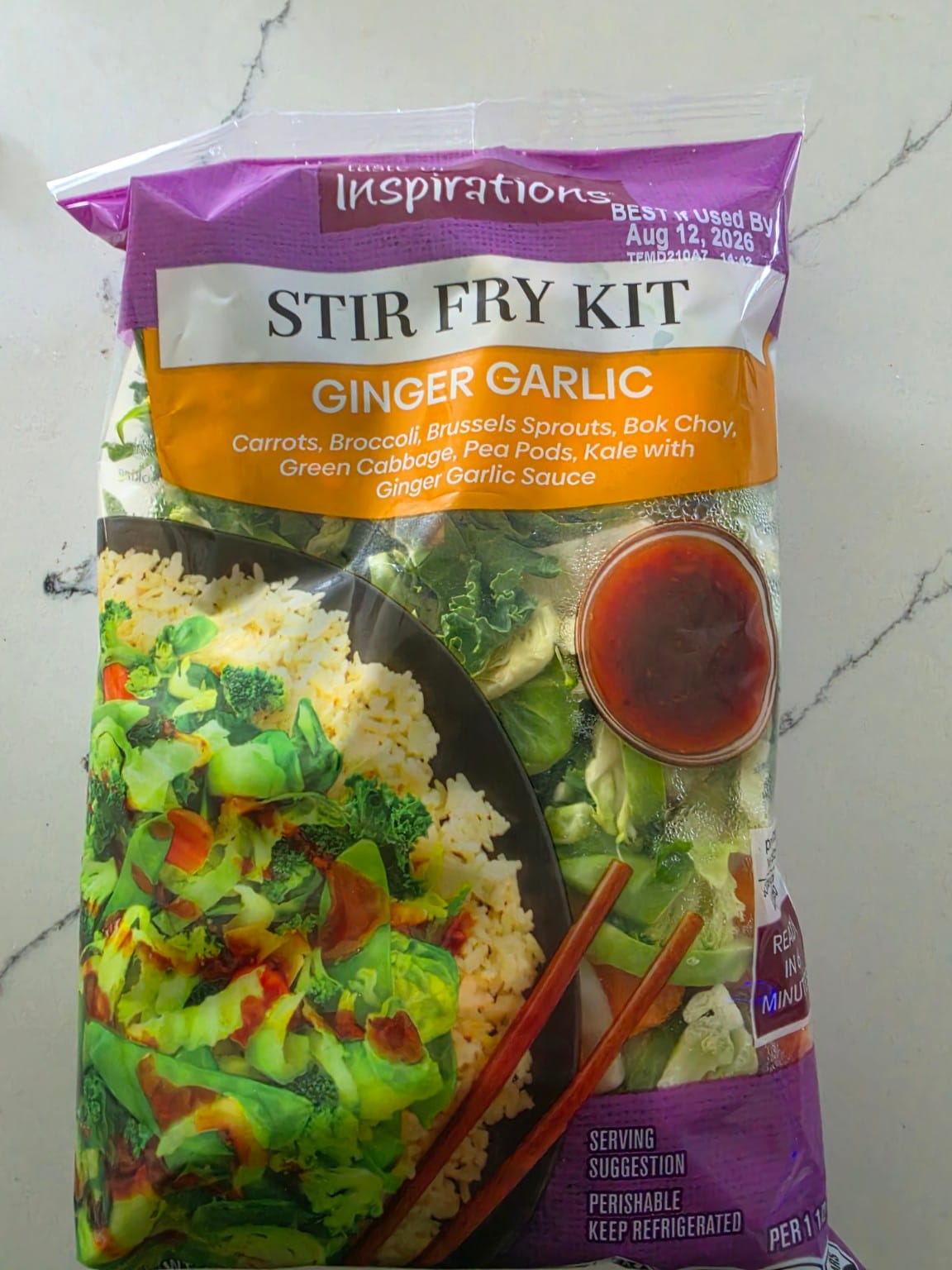
Combine the vegetables.
Give them a thin coating of peanut oil, soy sauce and liquid smoke, then season with a thin coating of Korean BBQ seasoning.
Toss thoroughly.
Again, leave them raw. They'll cook during final assembly.
6. Make the Pepper Base
Coat the bottom of a pan with peanut oil and heat it.
Add:
- 16 oz diced green peppers
- 1 large diced jalapeño
Cook until the peppers have softened.
Now add the remaining base ingredients together:
- garlic
- dark chili powder
- black pepper
- Korean BBQ seasoning
- hot sauce
- liquid smoke
- Japanese BBQ sauce
- oyster sauce
- peanut butter
Stir everything together and continue cooking until thoroughly combined into a thick pepper-forward base.
This is where much of the personality of the dish comes from. There's heat here, but the goal isn't simply to make something hot. The green pepper, jalapeño, chili powder and black pepper contribute different kinds of pepper flavor.
7. Push the Peanuts
Put a thin coating of peanut oil in a pan and get it very hot.
Add the ½ cup peanuts.
Toast them aggressively, stirring or tossing frequently, until they're deeply browned and have developed some slightly charred spots.
Don't stop when they're merely golden.
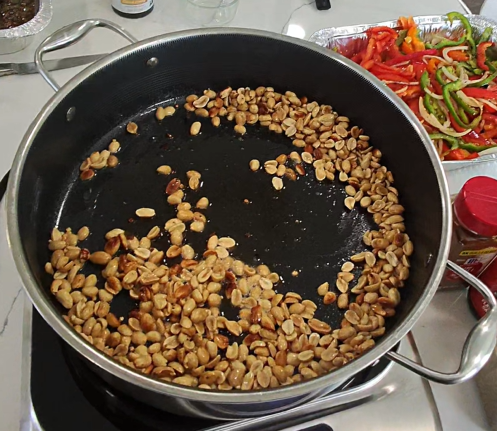
Add the toasted peanuts to the pepper base and continue cooking them together.
The base should begin to darken, thicken and caramelize around the peanuts.
This is one of the defining flavors of the dish.
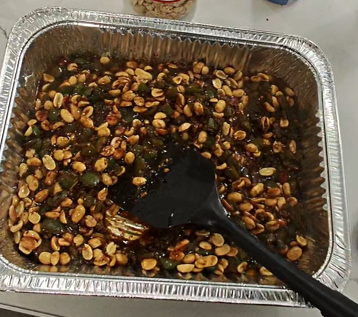
Keith's Note: Don't baby the peanuts. Take them right toward the edge. I discovered that the little bit of char does something completely different once the peanuts hit the pepper base.
8. Set Up the Final Cook
You should now have four separate components ready:
1. Water-velveted chicken
2. Raw seasoned peppers and onions
3. Raw seasoned Asian vegetables
4. Pepper-peanut base
Keep all four beside the stove.
This recipe makes a lot of food. Do not dump everything into one giant pan.
The entire point of the next step is to maintain high heat.
9. Cook in Batches
Heat a large pan over high heat.
Add a thin coating of fresh peanut oil.
For each batch, add:
- A portion of the velveted chicken
- Some of the pepper-and-onion mixture
- Some of the Asian vegetable mixture
- A few spoonfuls of the pepper-peanut base
Toss everything together over high heat.
Cook until the chicken is cooked through and the vegetables have softened somewhat while remaining firm with some bite.
Don't cook them until limp.
Transfer the completed batch to a large serving pan or container.
Add another thin coating of peanut oil to the pan and repeat with the remaining ingredients.
10. Bring It All Together
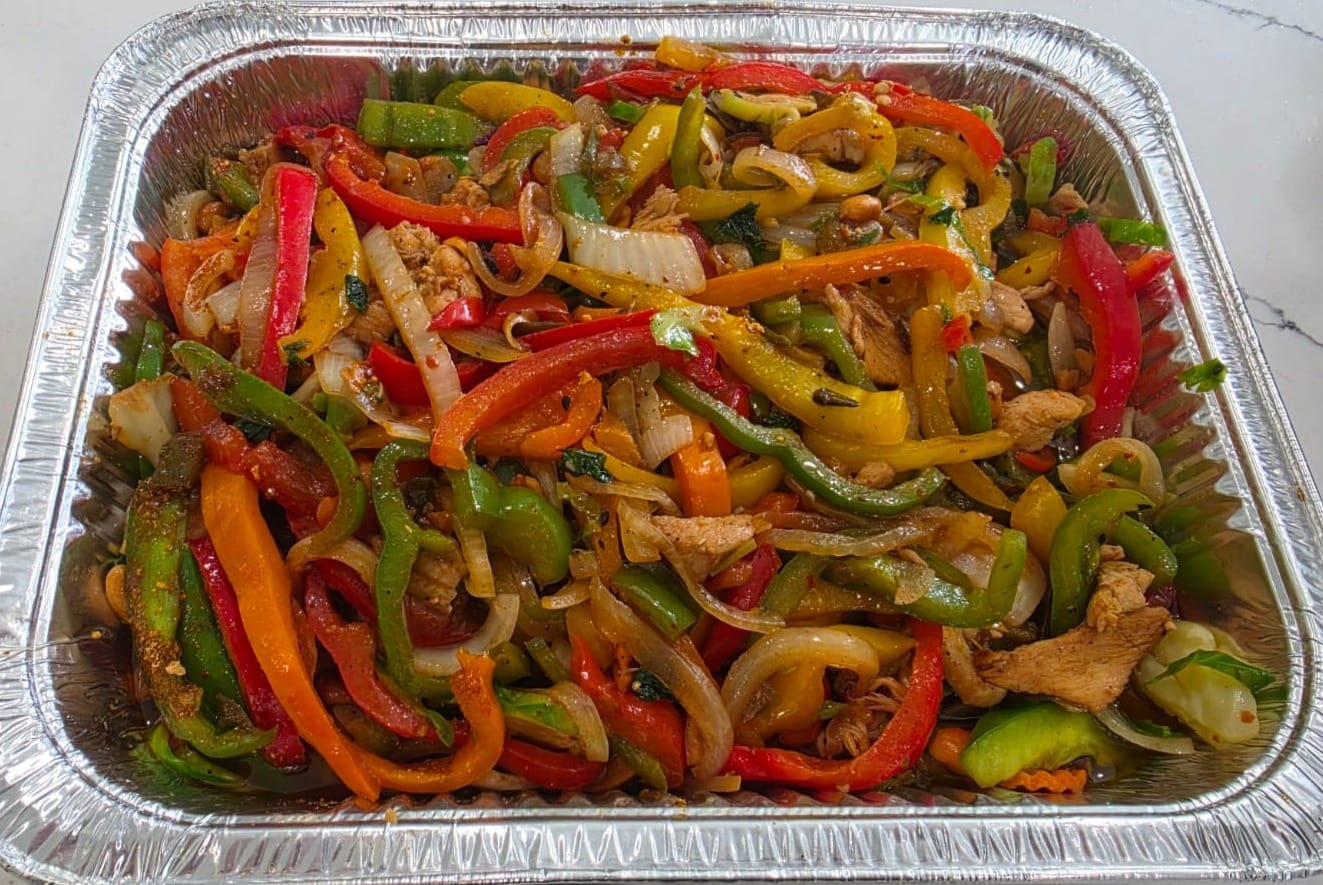
Combine the finished batches.
Give everything a final toss so the chicken, vegetables, peanuts and pepper base are distributed throughout.
Taste.
If it tastes good, stop messing with it.
Serve hot, either by itself or over rice.
Cooking for People Who Don't Like Peppers
There's a useful side effect to the batch method.
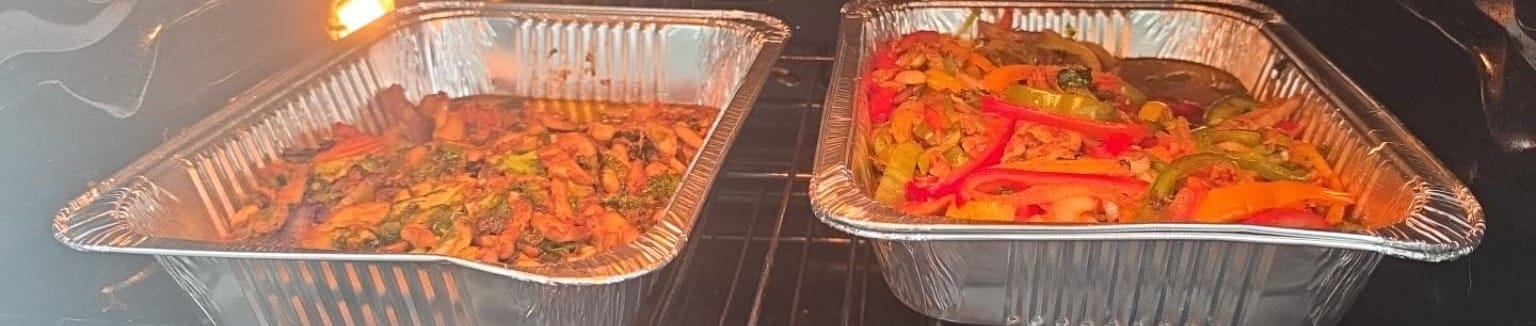
I had family members who didn't want the sliced peppers and onions, so I simply made one batch without the pepper-and-onion mixture.
They still got the flavor of the cooked-down pepper base without having to eat large pieces of pepper and onion.
That's optional and doesn't change the main recipe.
Why This Works
The recipe looks chaotic on paper, but there's actually some structure underneath it.
Velveting gives you exceptionally tender chicken.
Water velveting sets that coating without prematurely browning or drying the chicken.
Cooking in small batches over high heat keeps the huge quantity of vegetables from steaming into softness.
Multiple kinds of pepper create pepper flavor without relying exclusively on chile heat.
Peanut butter gives the base body and reinforces the peanuts without turning the dish into a conventional peanut sauce.
And those slightly charred peanuts introduce roasted, almost bitter notes that balance the sweeter sauces and help create that dark caramelized character in the base.
None of that requires the dish to obey the rules of traditional Kung Pao chicken.
That's kind of the point.